Hello friends~
I was told by a great coach that goals weren’t necessary.
I know now what he meant – that the workout could be enough, in and of itself. I met with him just twice a week in sessions that were challenging mentally and physically, and even when I was literally collapsing on the floor laughing at my ineptitude, I kept at it for years because it was so much fun. I didn’t realize how strong I was getting.
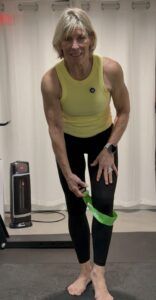
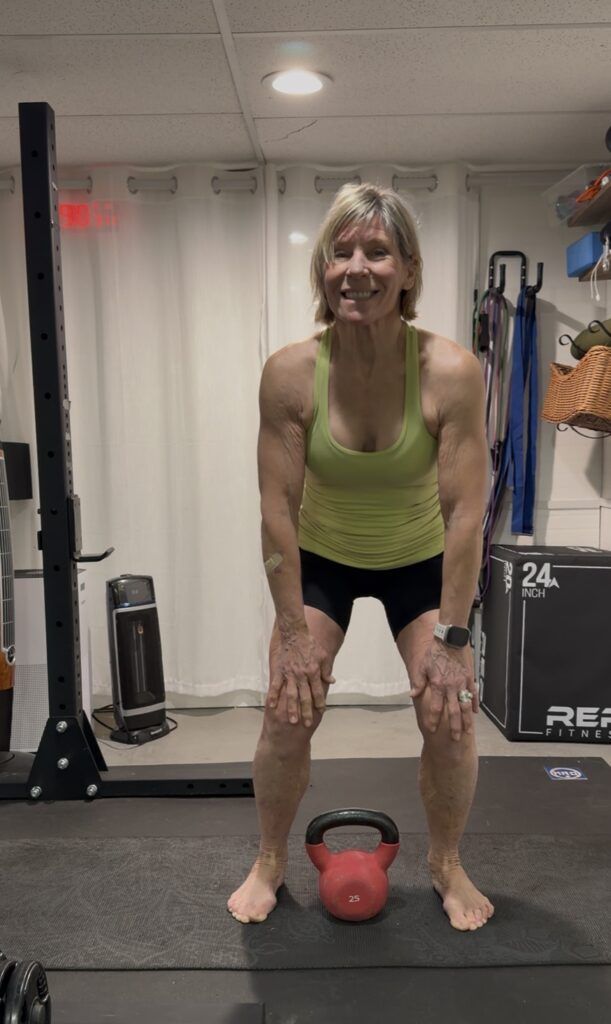
I had been working as a group fitness instructor (Mat Pilates, Spin, and a popular core program I had created), soon to be a certified coach myself, so my intention at that time was to learn everything I could from him – a highly certified coach with a degree in exercise physiology. I also knew that power training with kettlebells, and powerlifting, plus my spinning and Pilates could help make me a stronger, faster cyclist.
Training paid off during those years on challenging team bike rides with a group of dedicated cyclists, mostly guys. Then a few years later with encouragement from coaching colleagues, I competed in (and won!) powerlifting events. All of this occurred between the age of 50 and 65, and now at 72 it’s been incredible to learn how the human body – my own old lady body – can mix it up, have fun, and continue to develop strength and power.
Confusion and the overwhelm is part of the sales strategy.
If you’re working out with variety, and enjoying what you’re doing, fitness culture doesn’t know what to do with you. It wants to guilt and shame us – because feeling bad about ourselves sells products and programs.
The industry model:
- The “All-or-Nothing” Trap: Marketing often pushes extreme, “best” protocols because they look impressive on social media and promise rapid, “transformative” results.
- Aesthetics vs. Longevity: A massive gap exists between content designed for, say, a 20-something bodybuilder and the needs of someone (often 45+) focused on longevity, functional mobility, and simply moving well.
- Profit Motives: The industry often profits from people feeling bad about themselves in January, buying into intense programs, and stopping when they fail to maintain that pace.
Strength and overall fitness training shouldn’t rule your life, and workouts don’t have to leave you feeling wrecked.
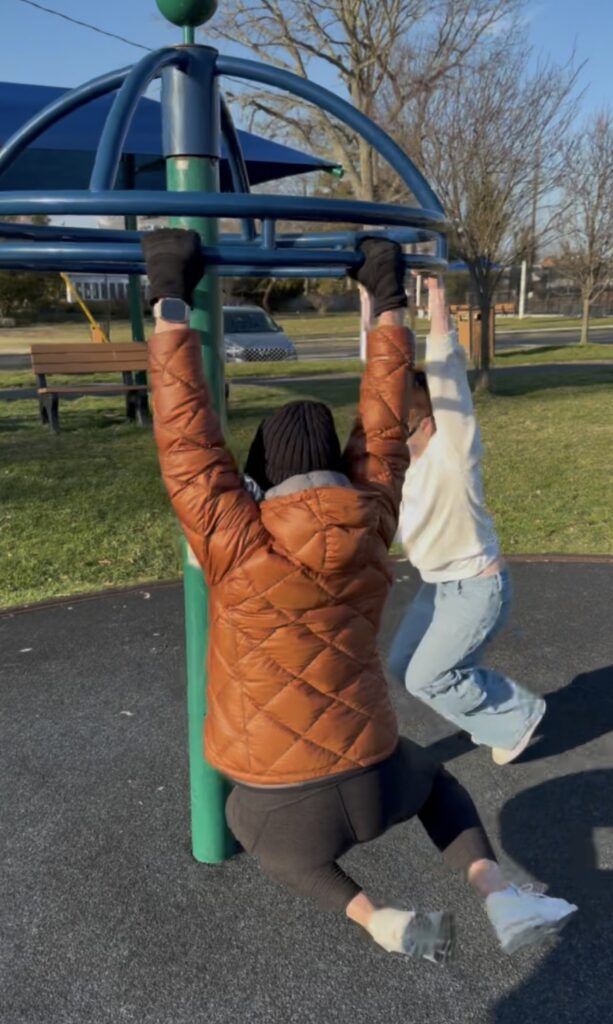
You’re strength training and doing a variety of other protocols several times a week. You’re walking briskly, maybe running outdoors, riding your bike, indoor rowing, double stair climbs in the house, or playing with kids. You might be doing repetitive basics involving some heavy weight, or just body weight, maybe bands. Cardio first, or at the end, or the next day. You get your workouts regularly when your schedule allows, and you don’t beat yourself up if you can’t be perfectly consistent.
You’re not being sucked into the messaging that you need a program that leans on only one “best” protocol.
YAY!
The American College of Sports Medicine have just released new and updated resistance training guidelines – the first in 17 years. These new guidelines are based on over 130 scientific reviews covering thousands of studies, making these the most comprehensive strength training recommendations ever.
The take home message is this:
Doing resistance training matters more than how you do it.
Key updates stress that home-based workouts are very effective, rather than only strict, complex strength training and lifting protocols in a gym setting.
- Consistency: The best program is one you stick with. The primary goal is to start. Then stay with it.
- Minimalist Approach: As little as 1–2 sets of a few exercises twice a week is enough for meaningful gains.
- No “Perfect” Protocol: Exact rep schemes are less critical than training to your individual challenge.
- Flexibility & Accessibility: Effective results do not require a gym. Bodyweight exercises, elastic bands, and home training are recognized as effective alternatives for building muscle and functional strength.
- Full Range of Motion: Train to a full range of motion ROM to optimize strength gains.
- Focus on Health & Living Well: Train for functional performance, whether it’s daily life, or athletic goals.
- Consistency > Intensity: The most effective workout plan is the one you stick with, not the one that destroys you. Show up regularly, rather than focusing on extreme workouts that can lead to injury or burnout.
- Prevent Burnout: Ditch the “no days off” or “no pain, no gain” mentality.
- Workout as Lifestyle, Not Punishment: Movement, health, and how you feel, rather than on punitive workouts (“burning off the calories”), or rapid aesthetic changes.
- Repetitive Basics: Rely on simple, repetitive movements (squats, hinge, push/pull) which are often better for consistency than complex routines.
- Mix It Up: It is perfectly acceptable to mix high-intensity bursts with lower-intensity, sustainable routines, or to adjust based on energy levels.
- Have Fun: The best exercise is the one you enjoy, and the ones you do.