Hello friends,
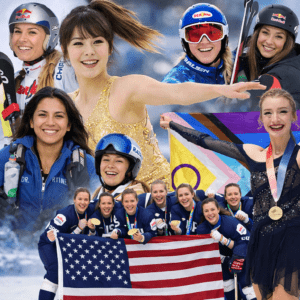
I feel so hopeful and proud of the women in the Winter Paralympics as true heroes in their bodies and lives. They’re modeling the meaning of self-determination, overcoming unbelievable obstacles, and doing the work it takes to achieve a level of accomplishment that can inspire us all.
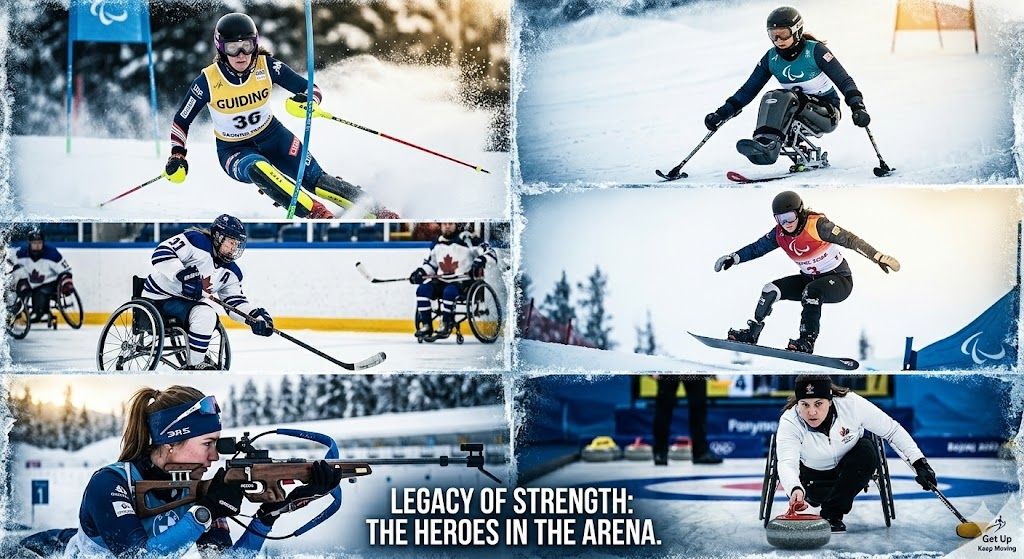
We have everything we need to be our own heroes in every area of life. But it isn’t easy lately – feeling as if the clock is turning backwards.
Breaking from distorted body image
When I was a little girl, I was growing into a body that could’ve been athletic, but it was referred to as “chunky, sturdy, chubby, solid.” Twiggy was the ideal, and the fact that adults were commenting on my maturing, changing body had a terrible effect. Throughout middle school and high school, I dreaded gym class and avoided anything to do with sports. I lived with a distorted body image for years – especially hating my big legs—leading to a period of anorexia between ages 15 and 16. While the eating disorder was mostly resolved, it took years to stop counting calories, to stop thinking of myself as “good” or “bad” depending upon what I ate, and to learn how to truly appreciate my strong body and enjoy food for both pleasure and fuel.
Claiming strength
It wasn’t until I was 50 that I honestly understood that my strong body is a real gift. I began to explore the ways I could challenge it and share this realization with others. It seemed at that time that women were able to move forward in sports with Title IX, excel in their careers, and have bodily autonomy. Now, 20 years later as a strength coach, advocating for women to take ownership of their bodies has become a new kind of challenge. Skinny culture is back (did it ever really go away?), and women are still saying they’re afraid to lift heavy for fear of injury, or they (still!) say they don’t want to get “bulky.” The greatest fear should be of dying as a frail, broken woman.
Rejecting the beauty/wellness industry narrative
I remember how it felt, and how mentally and emotionally damaging it was to be described in terms of how my body looked. The beauty and wellness industry has never stopped characterizing women’s body parts with descriptions like “bingo arms,” “muffin tops,” and “FUPA.” It is continuously marketing drugs and products to make us feel shitty about the size and shape of our bodies, and especially about aging.
A legacy for the next generation
After learning how to love my body for what it can do, I’ve been able to guide my daughters to grow up celebrating strength. I hope for a world in which their strength – in body and mind – is not restricted by their gender or abilities, and I want the same for my granddaughters. If we want our daughters and granddaughters to “dream big,” we have to fix the system that still pays women less, offers narrower opportunities, and promotes policies that treat women’s bodies as vessels for procreation or “baby-machines.”
Proactive allyship and standing together for equity
To the fathers, grandfathers, and sons: we need more than “not all men.” It requires shifting from defensiveness to proactive allyship, focusing on systemic change rather than individual innocence. Of course, we know that not all men are perpetrators, but many men (who may not even realize it) benefit from a patriarchal system that causes harm to the women they profess to love and care for.
Men, you can actively stand up for women’s equity at home, in the gym, at work, and in your neighborhoods. Women, we must stand beside our sisters. I’m saying it right here: those who have allied with misogynistic men are as culpable as the men who have committed the abuse.
With love and hope,
x
Polli