Hello friends~
It’s been an amazing 2026 Olympics. Women won 60% of Team USA’s total medals – 8 of the 12 gold medals, surpassing the men’s 4 gold and 12 total medals!
The performances of the women athletes have been inspiring for everyone – and their stories even are more so. I hope you’ll have time to open the links and read about them.
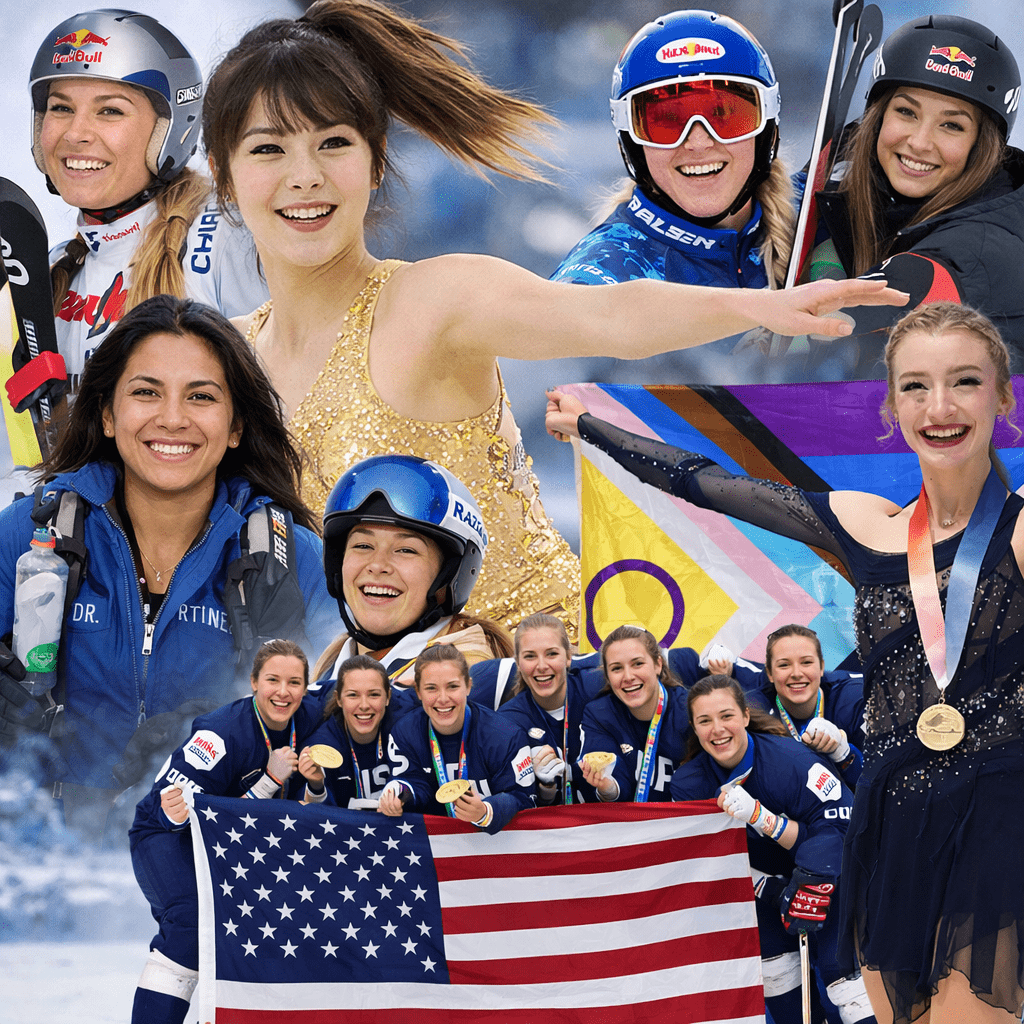
Dr. Regina Martínez Lorenzo raised funds as a dog walker to be the first ever Mexican cross country skier. Jessie Diggins, the most decorated American cross-country skier in history, battled an eating disorder for years, won a Bronze this year, and has a documentary, Threshold, premiering today on Peacock. Lindsey Vonn courageously concluded her illustrious skiing career by attempting a final, daring run, risking everything, crashing horribly, enduring criticism, and giving us a master class on how to live.
The list goes on:
Amber Glenn, the first openly queer Olympic women’s figure skater.
Mikaela Shiffrin’s Gold Medal: The Road To Redemption.
How Breezy Johnson conquered the Cortina course that nearly ended her career | Winter Olympics 2026.
Inside the mind of Eileen Gu, Winter Olympics superstar
And the US Women’s Hockey Team Gold.
- Sarah Schleper (46, Mexico): Alpine skiing.
- Silvana Tirinzoni (46, Switzerland): Curling, who also became the oldest female medal winner in Winter Olympic history.
- Deanna Stellato-Dudek (42, Canada): Figure skating pairs.
- Elana Meyers Taylor (41, USA): Bobsled, who became the oldest U.S. woman to win a Winter Olympic gold medal
These women, and others have defined for me more than I can remember in any other Olympics how much we can do, all of us at any age, with any personal or physical limitations (Paralympics begin on March 4th!) can achieve goals in our own lives, on our own terms, to stick to principles, to be outspoken, brave, and unapologetically who we are.
The process is different for each athlete with support and demands from coaches, family, and balancing mental challenges, childbirth, periods, injuries, proving there isn’t only one way to perform at the highest level.
***********************************************************************************************************************
Taking care of our physical and mental health doesn’t have to be complicated.
In these complicated, stressful times, let’s do ourselves a favor and keep the basic things simple.
Fitness/wellness influencers push plans, programs, diets, supplements, and cleanses that promise your strongest, longest, best, high performing life. Some influencers are doctors, so it’s not easy to parse through it all. Not to mention biohacking – IV vitamin drips, ozone therapy, or coffee enemas.
We really do know that the very basics of diet and exercise impact every aspect of health and fitness, including mental acuity. So …
Simplify diet.
A longer life is NOT determined by any specific diet or eating pattern:
DASH, Mediterranean, plant-based, AHEI (Alternative Healthy Eating Index),or a diabetes risk reduction pattern all contribute to longevity, but health span – meaning lower risk of disease, and a more robust, vibrant life – the life in your years, rather than the years of your life. People who scored highest on any of the five patterns had up to a 24 percent lower risk of dying. In other words, eating well is associated with approximately 1.5 to 3 additional years of life expectancy.Here’s the science if you want to dive in: Associations of five dietary patterns with mortality and life expectancy.
What does it all mean in real life? A decent amount of protein for you. More vegetables, fruits, whole grains, legumes, and nuts. Eliminate or drastically reduce sugar-sweetened beverages and processed meat.
Don’t overcomplicate exercise.
Ditch menstrual cycle training calendar.
Dr. Lauren Colenso-Semple — a strength coach and PhD researcher designed a fascinating study. Women did resistance training in the luteal and follicular phases. Here’s the research: Menstrual cycle phase does not influence muscle response to resistance exercise.
What does it mean in real life? Exercise when you can, and whenever you want to (or even sometimes even when you might not really want to – you decide). Your body will build muscle whenever you exercise using protocols of strength training (like progressive overload), regardless of the time of your cycle. It might feel tougher to get the work done during certain phases, but the training still works to build muscle. Adjust intensity accordingly – the athlete in you will know how.
Bottom line:
Whether you’re a powerlifter, runner, jogger, rower, cyclist, skier, mom/grandma, midlife, or post menopause, triathlete, a casual exerciser – or any or all of these at any given time…
Keep it simple.
Eat good food that supports your activities and your lifestyle.
Make time to strength train to build strong muscles.
x
Polli